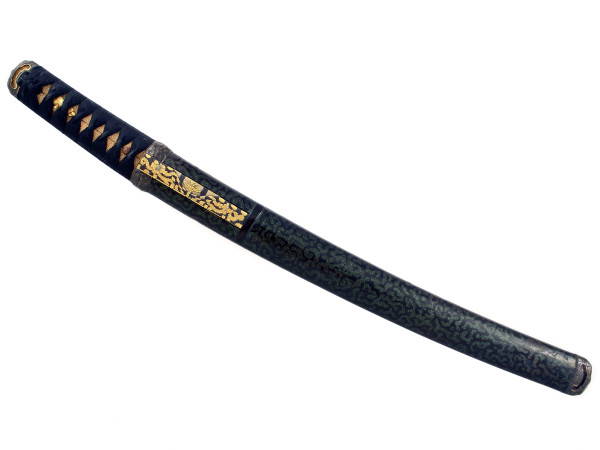
A Koto Tanto in Shirasaya
Koto tanto
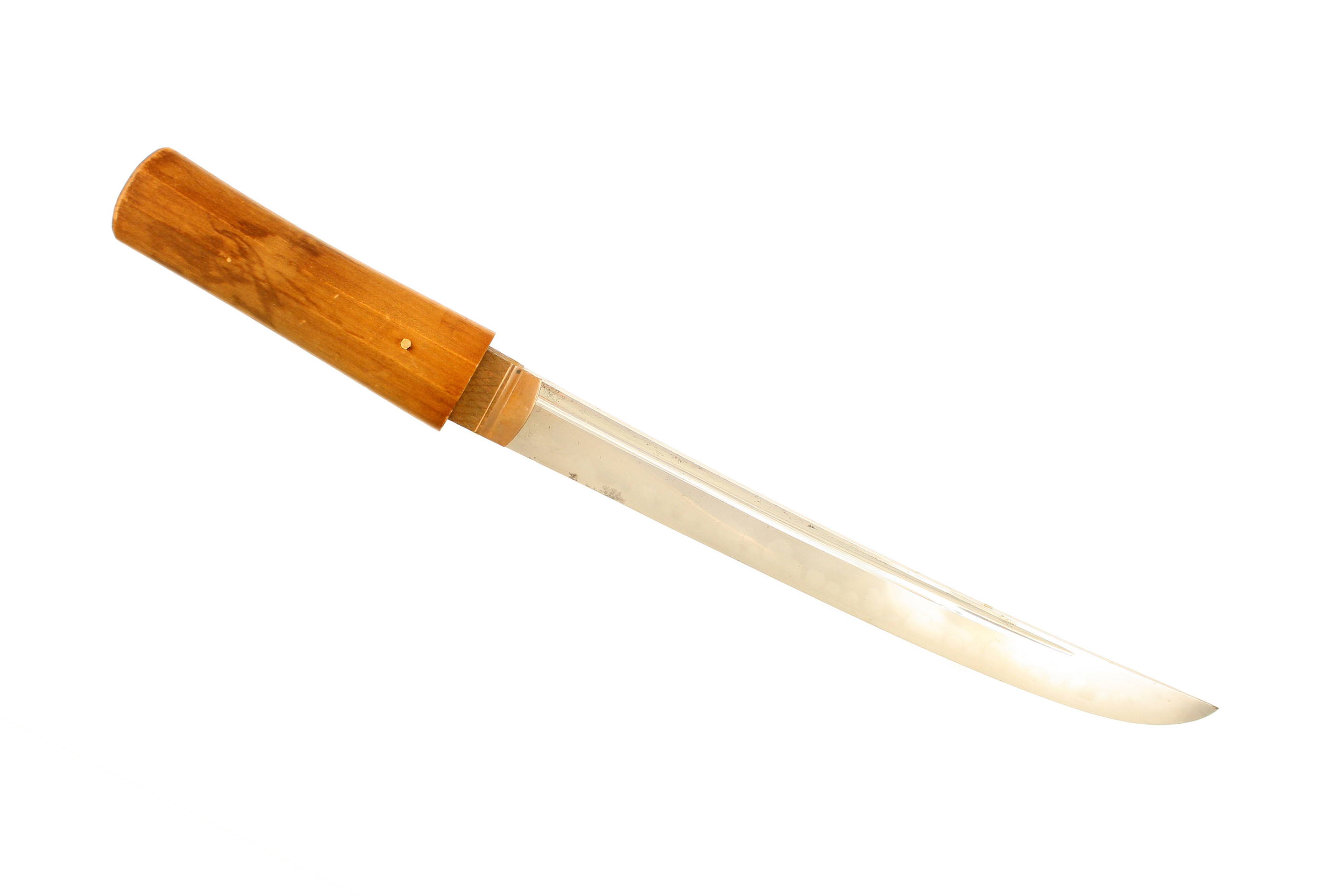
Blade type: Tanto. Hira-zukuri
Blade length: total 40.5 cm; nagasa 30.6 cm
Blade width at: Machi 2.7 cm. Kasane at mune-machi 0.7 cm
Sori: 0.4 cm. Tori
Mune: Gyo-no-mune
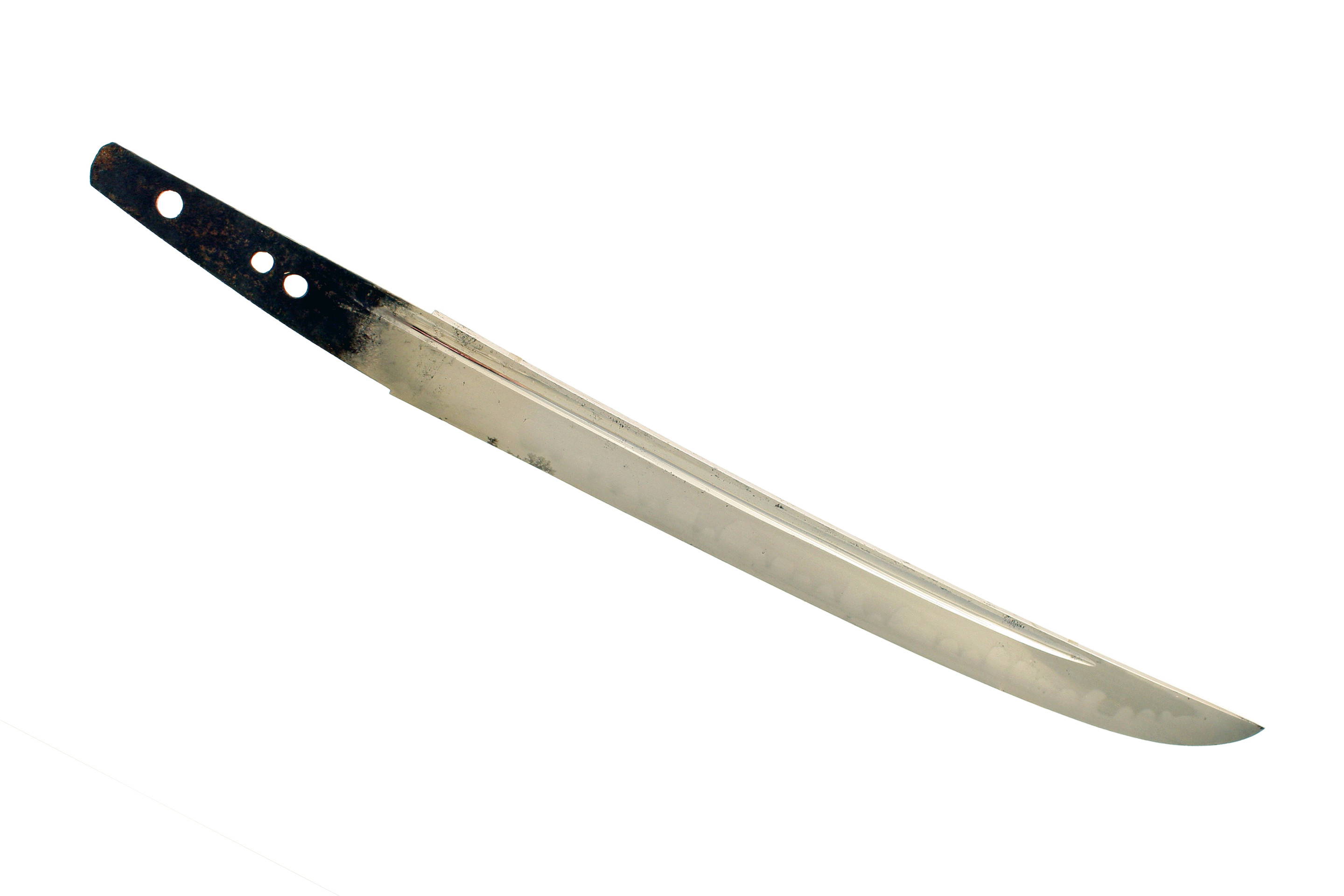
Horimono: Bohi (katana-bi) which runs into the nakago (ryo-chiri)
Kitae/hada: Fine itame & mokume?
Hamon: Gunome Midare in varied shapes
Activity: Much nie
Utsuri None?
Boshi: Jizo
Kissaki: None
Nakago: Ubu
Nagako length: 9.9 cm
Mekugi-ana: 3, drilled
Nakago shape: Futsu
Nakago-jiri: Kurijiri
Yasuri-me: Higaki
Mei: Kanemasu. 2 character mei on omote
Date/School/Period: Nara group in Seki during Tenbun-Eiroku era (1532-69)
Oshigata: none
Weight: 198g
KOSHIRAE:
Habaki: solid copper. Multi-patterned design plain/wide & narrow groove/double lined diamond
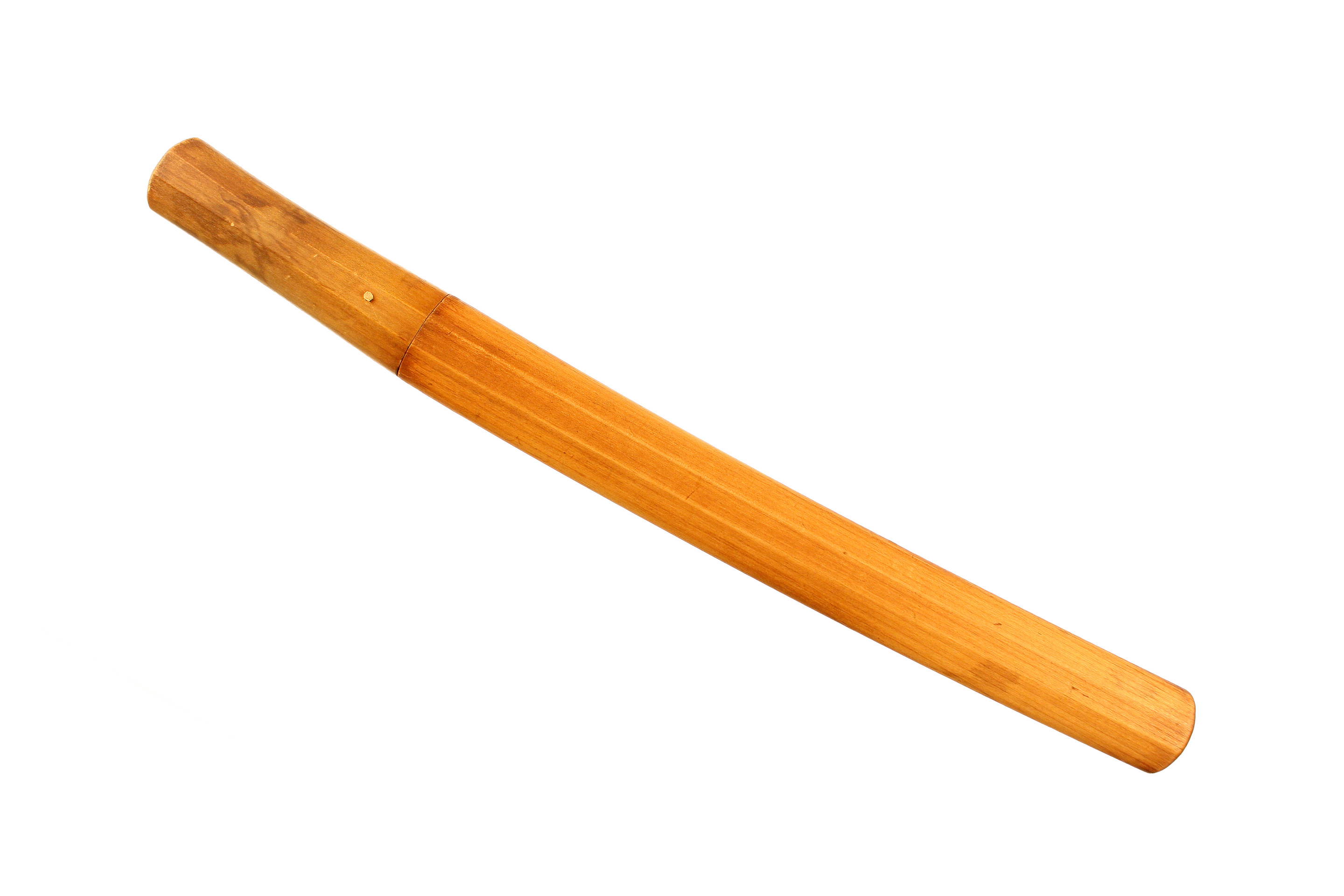
Saya: Shirasaya, overall length 47.1 cm
Papers: none
Comments/References: According to reference Mino-to Taikan, KANEMASU 兼舛 belonged to Nara 奈良派 group in Seki, Mino Province during Tenbun-Eiroku era (1532-69). He is categorized as a Mino swordsmith.
Kane also means money or gold, and Masu means increasing in Japanese. Because of this the blades forged by Kanemasu were treated as an auspicious symbol to gain more money/increase one’s property. It is said to bring good luck. An effective gift to someone entering a business or profession.
The MINO swordsmiths style, also known as MINO-DEN, basically has the TOGARI (Pointed shapes protruding from the Hamon) in a classic straight line and random temper line with some white Utsuri. MINO-DEN had its origin from YAMATO-DEN in the late KAMAKURA period (1280-1330). It flourished in the MUROMACHI period (1333-1573) and continued until the EDO period (1603-1868).
Blade in good old polish, but might benefit from a light polish just to the stained area, so long as it does not seem out of place with the existing polish, or just leave it alone. A black rust stain extending to both sides of the edge as if someone has held the blade between thumb & finger, 4 cm from ha-machi
£1,000.00
1 in stock