A good O Tanto with signed Shinto blade
Shinto Aikuchi
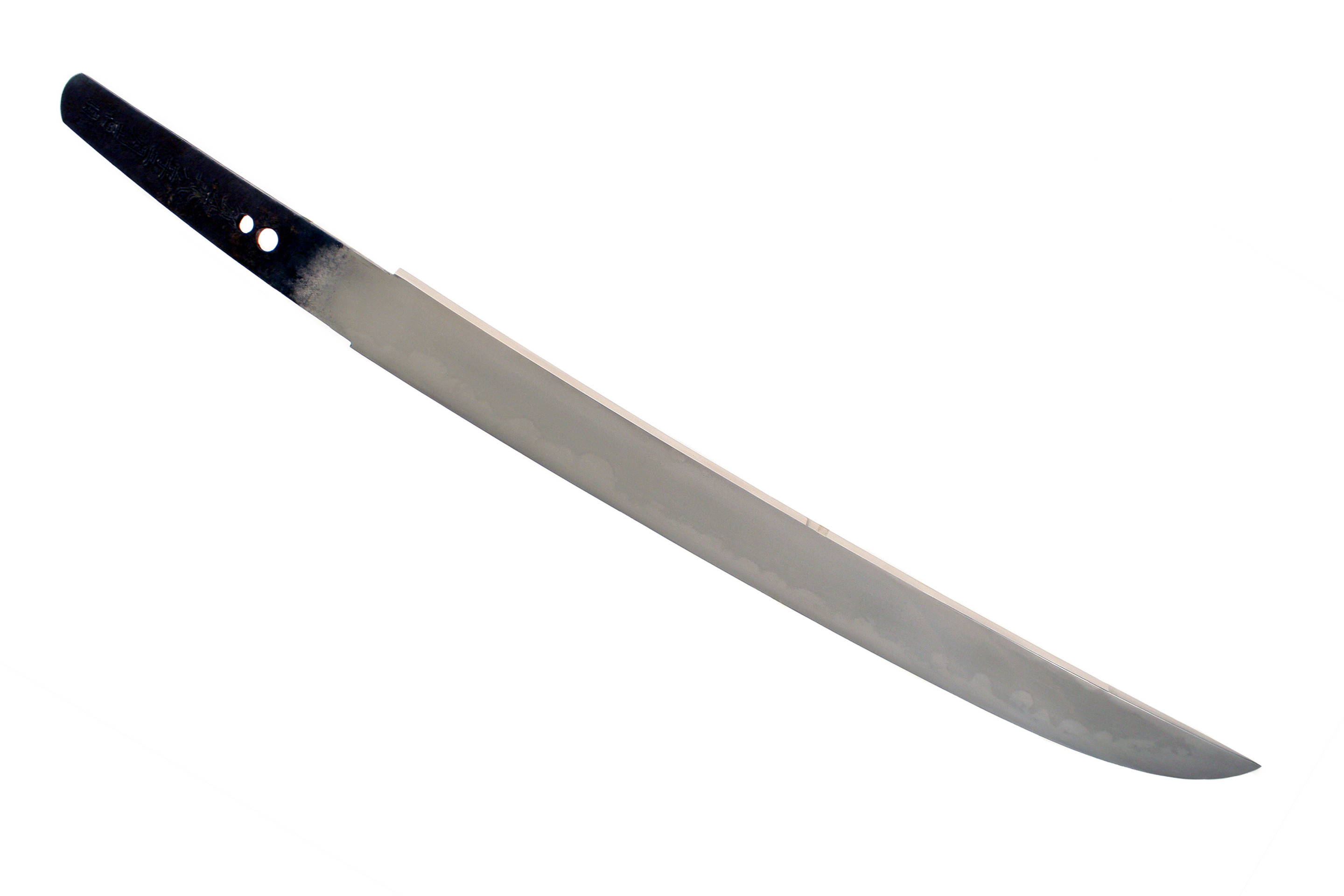
Blade type: wakizashi/O-Tanto. Hira-zukuri
Blade length: total (tip to end of tang) 47.2 cm; nagasa 34.8 cm
Blade width at: Machi 3.1 cm Yokote n/a. Kasane at mune-machi 0.8 cm
Sori: 0.6 cm. Tori
Mune: gyo-no-mune/ihori
Horimono: none
Kitae/hada: itame
Hamon: choji-midare (ika-no-atama-choji-midare?) or Toran. Present on the mune
Activity: nie & nioi
Utsuri: none
Boshi: hira-zukuri (no yokote)
Kissaki: hira-zukuri with o-kissaki
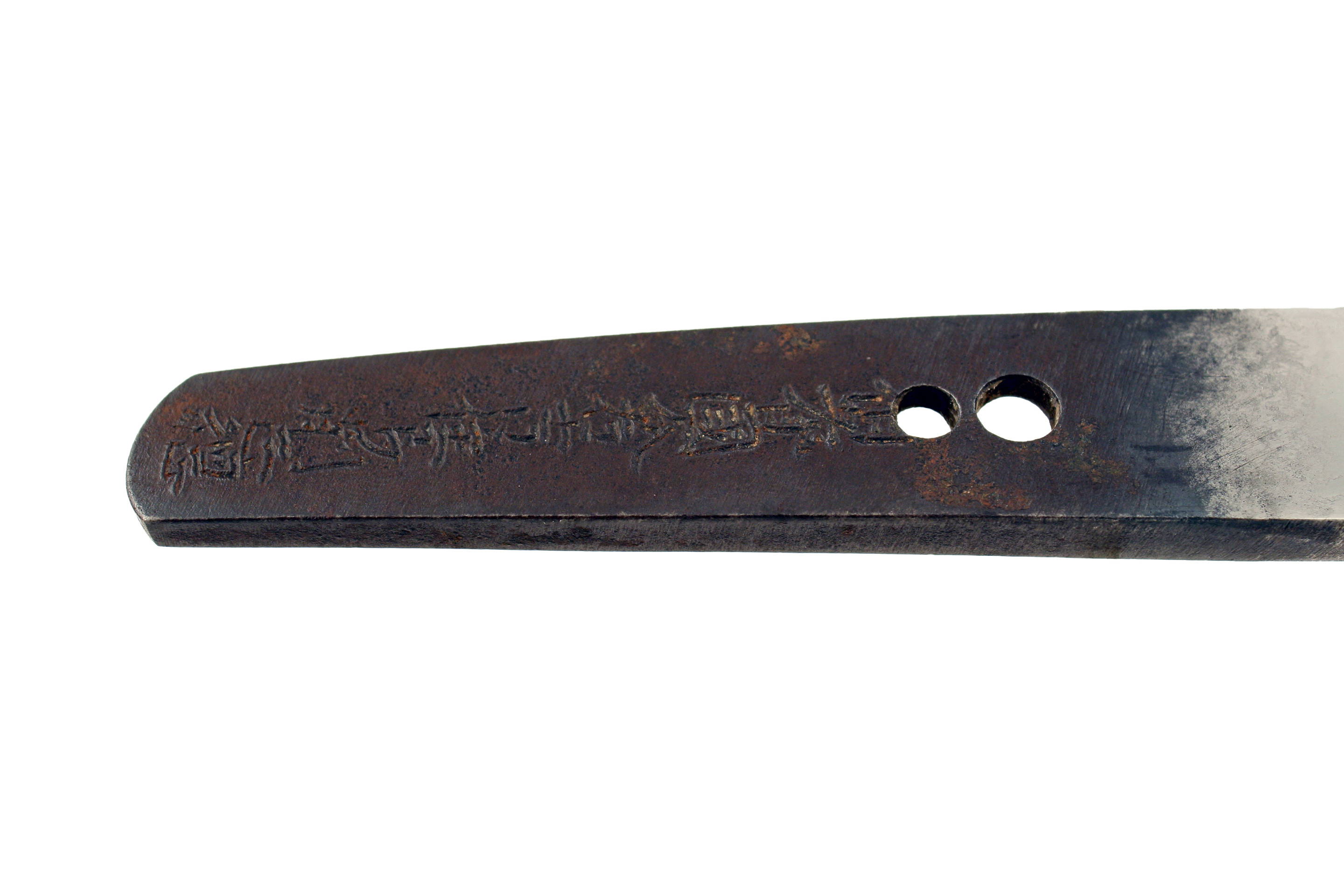
Nakago: ubu. Flat mune
Nagako length: 12.4 cm
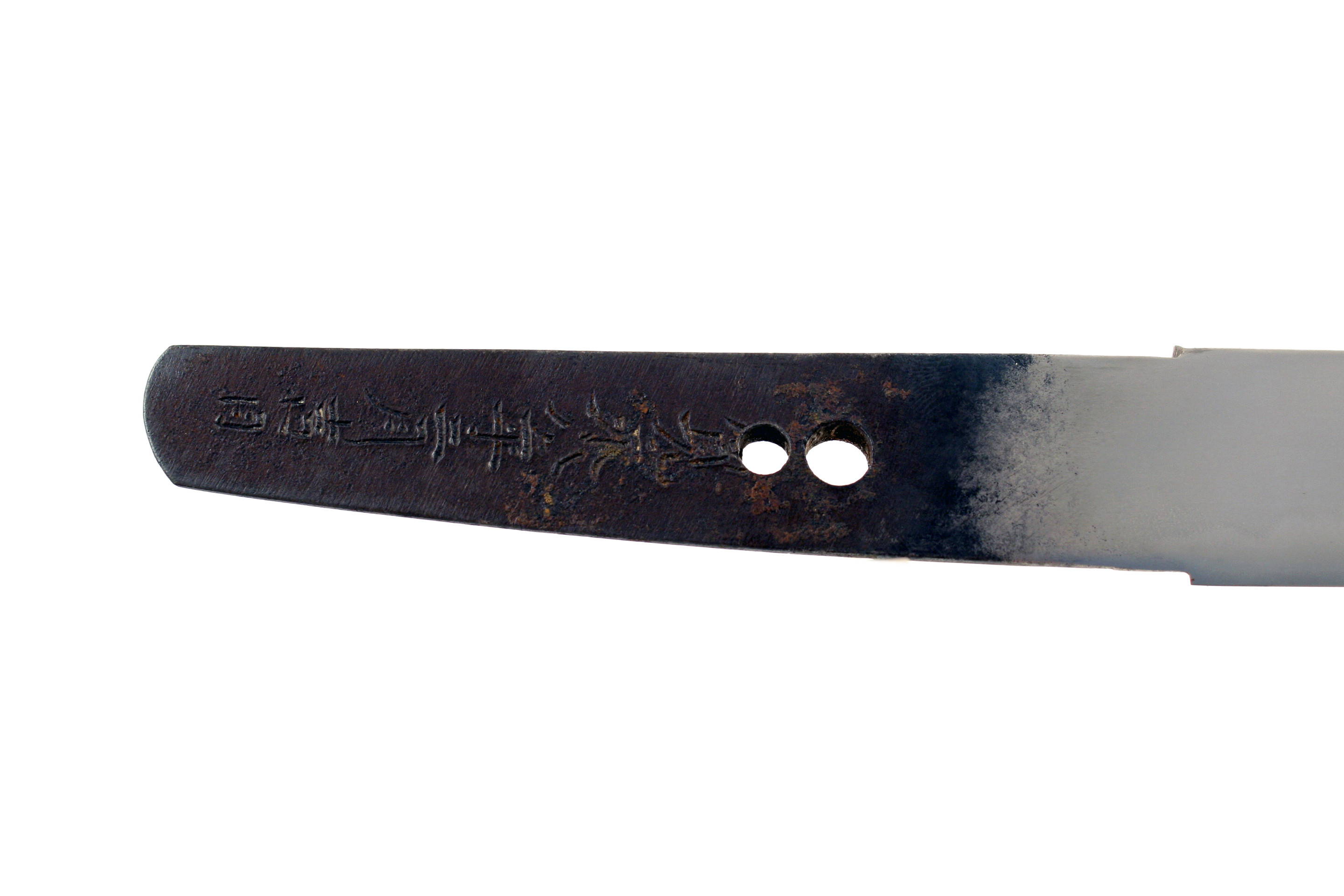
Mekugi-ana: 2 (the larger one nearest the hamachi now secures the blade) the smaller one through the top of the first kanji on both sides. Both circular & drilled
Nakago shape: futsu
Nakago-jiri: haagari
Yasuri-me: kattesagari
Mei: 7 characters? hoki kuni kurayoshi ju yuge masatsuna (omote) and dated Kan’ei 8 (ura). 1st Generation. Mei is in the centre of the Nakago; the Smith’s name & the forging date on opposite sides. The characters are clearly cut, the date perhaps more so
Date: 1631/1632
School:
Period: Edo Period, Kan’ei Era
Oshigata: none
Weight: 415 g
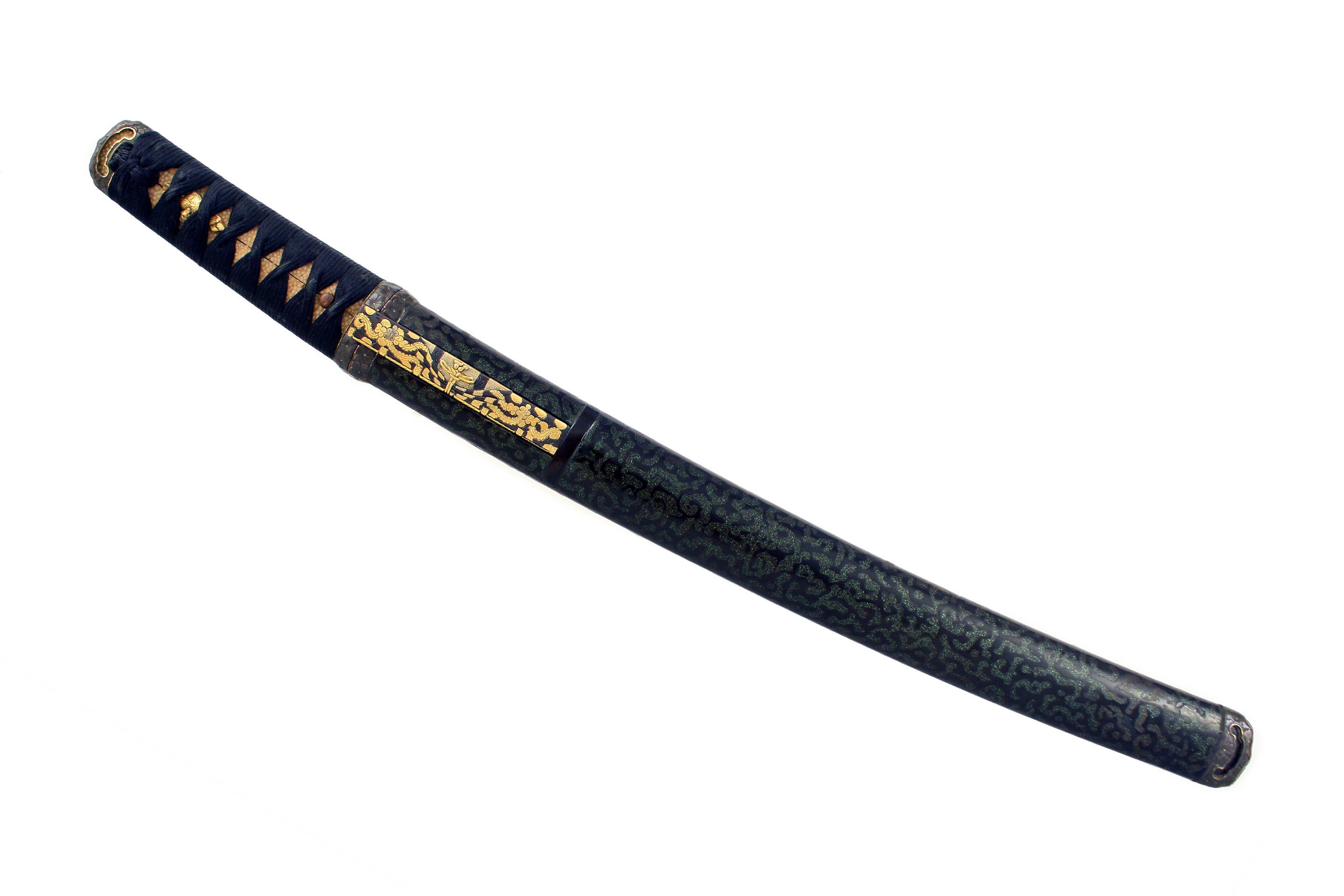
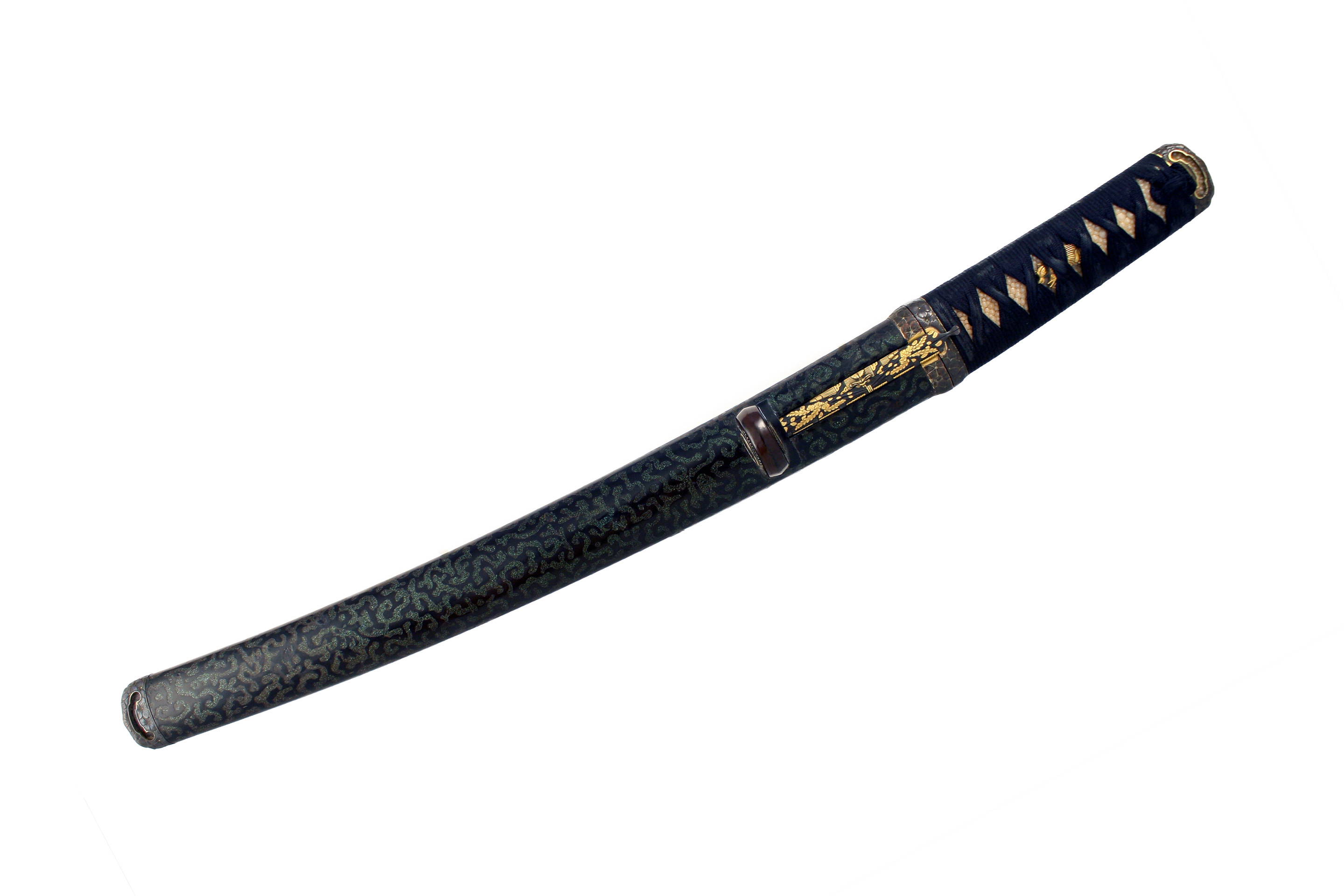
KOSHIRAE: aikuchi
Tsuba: none
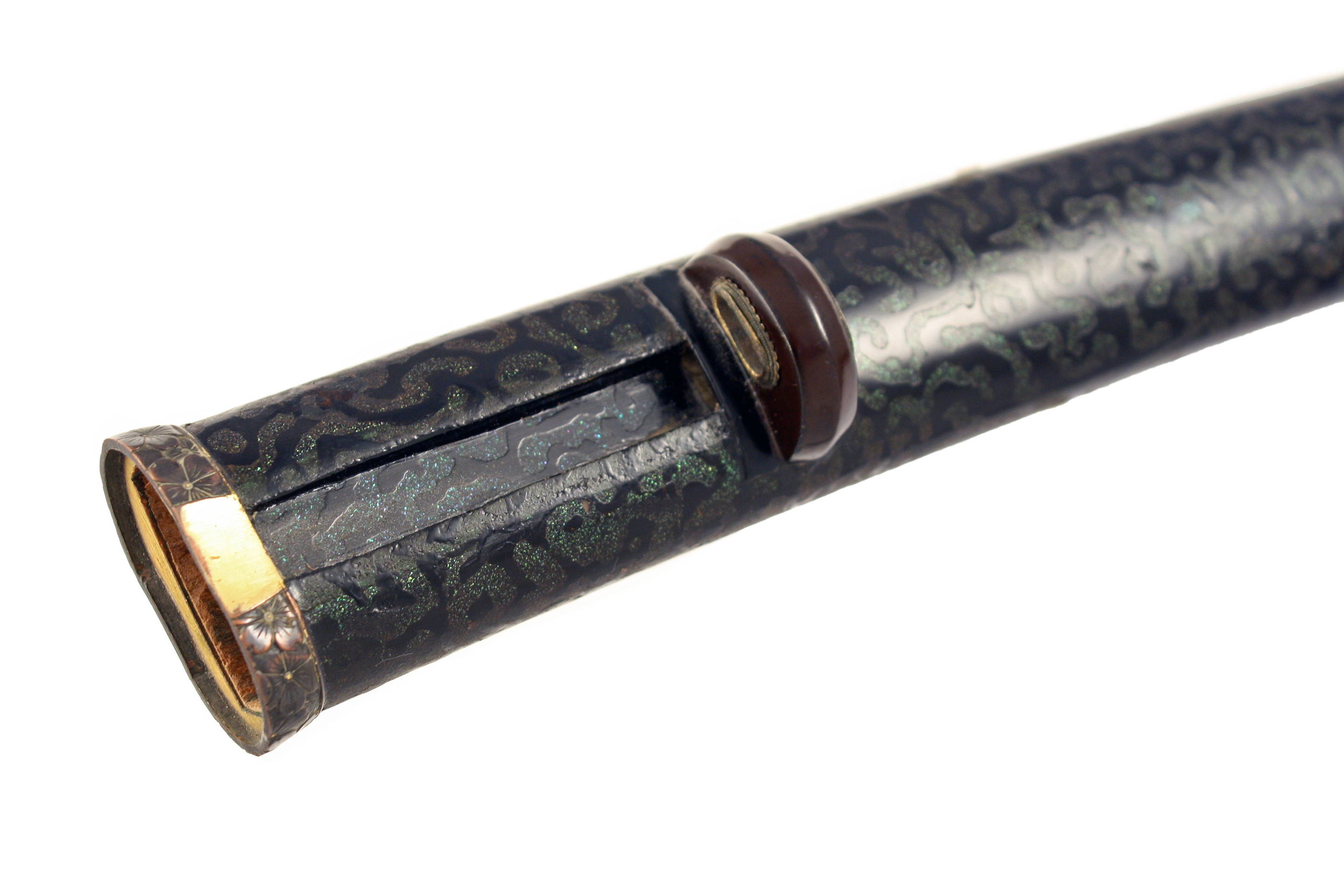
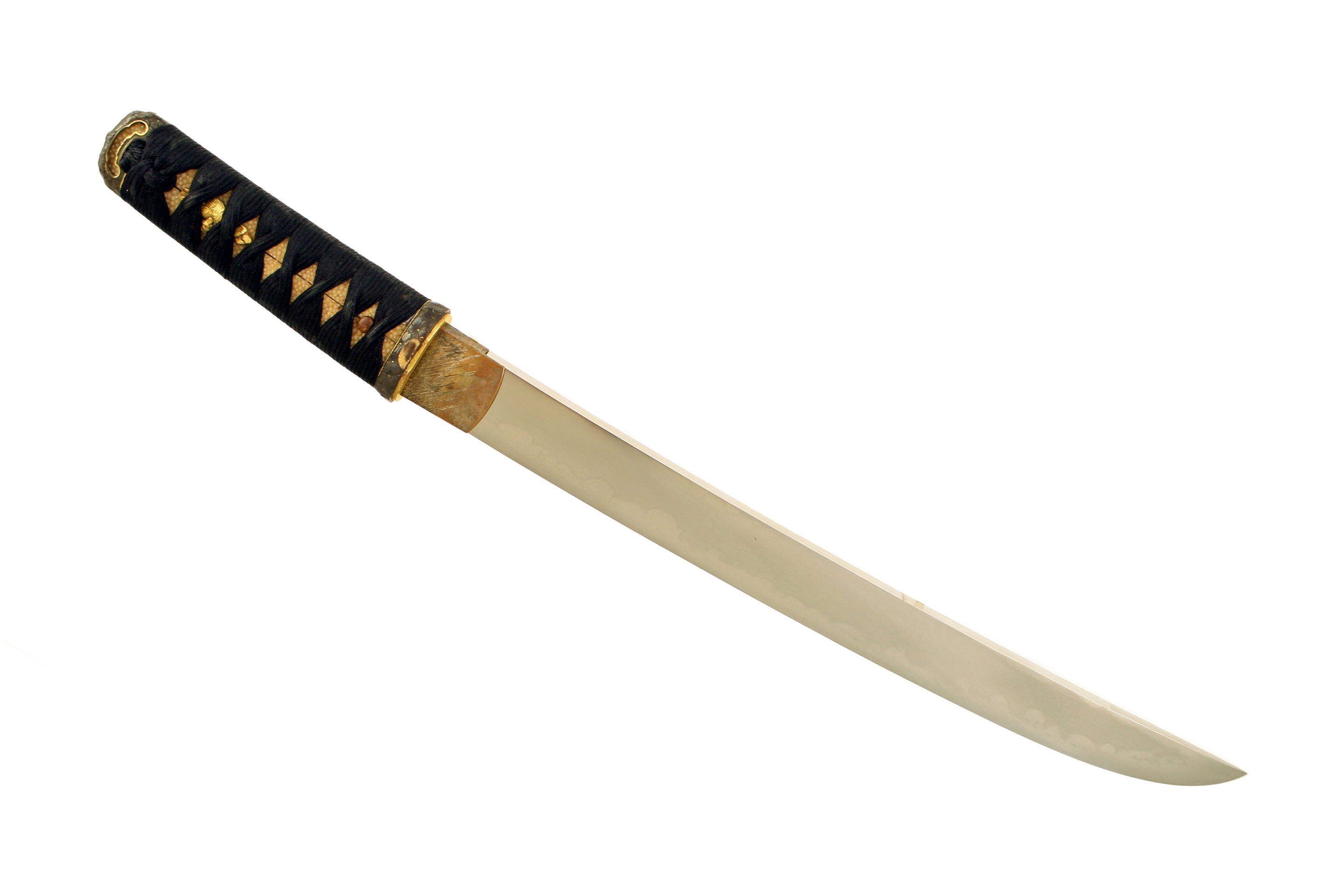
Fuchi/Kashira: kinko (shibuishi). fuchi, kashira, koiguchi & kojiri all match being finely chiselled with apple blossoms.
Menuki: the menuki are a pair, but not identical, of the same theme of gilded copper hens, on the omote side with a chick.
Habaki: single piece of copper of Koshi-Yujo style
Seppa: none
Ito: black silk. Good condition
Same: white. Good condition
Saya: dynamic swirl lacquer saya in green nashiji and black. The kurigata appears to have been replaced with one of plastic; presumably the original matched the rest of the koshirae shibuishi fittings. Has 2, but not a matching pair of shitadome
Overall length from back of kashira to tip of kissaki 51.6 cm
Overall length when in scabbard from back of kashira to back of kojiri 55.3 cm.
Scabbard length from back of koiguchi to back of kojiri 40.6 cm
Provenance:
Peter Yorke’s description of 2017:
“A good O Tanto with signed Shinto blade. The blade is signed Hoki Kuni Kurayoshi Ju Yuge Masatsuna and dated 1631. This is the 1st generation of this family of good smiths. The heavy blade shows good polish, itame grain and a billowing choji hamon, of fine quality. The mounts are matching with good quality shibuishi fuchi kashira, and saya mounts, finely chiselled with apple blossoms, set off by a dynamic swirl lacquer saya in green nashiji and black.
There is provision for a kodsuka and kogai but both are missing. The mounts probably age to the early 19th century”
Papers: none
Comments: good quality mounts. Blade average with a blister on the omote side near the tang end of the blade. Blade in good polish
References:
Mei is similar to the extract from the Nihonto Club signature search under “MAS1210 Masatsuna in the Province of Hoki. Era of Genna (1615 to 1624):
伯耆國倉吉住藤原正綱作
hoki kuni kurayoshi ju fujiwara masatsuna saku
伯耆國倉吉住弓削新三郎正綱作
hoki kuni kurayoshi ju yuge shinsaburō masatsuna saku
1624 to 1644 was the Kan’ei era. 1631 was Kan’ei 8.
Peter Yorke sold to me 22.4.2017.
Les Stewart for polishing blade 27.11.2018
Mike Hickman-Smith for lacquer work on the saya 24/4/2019
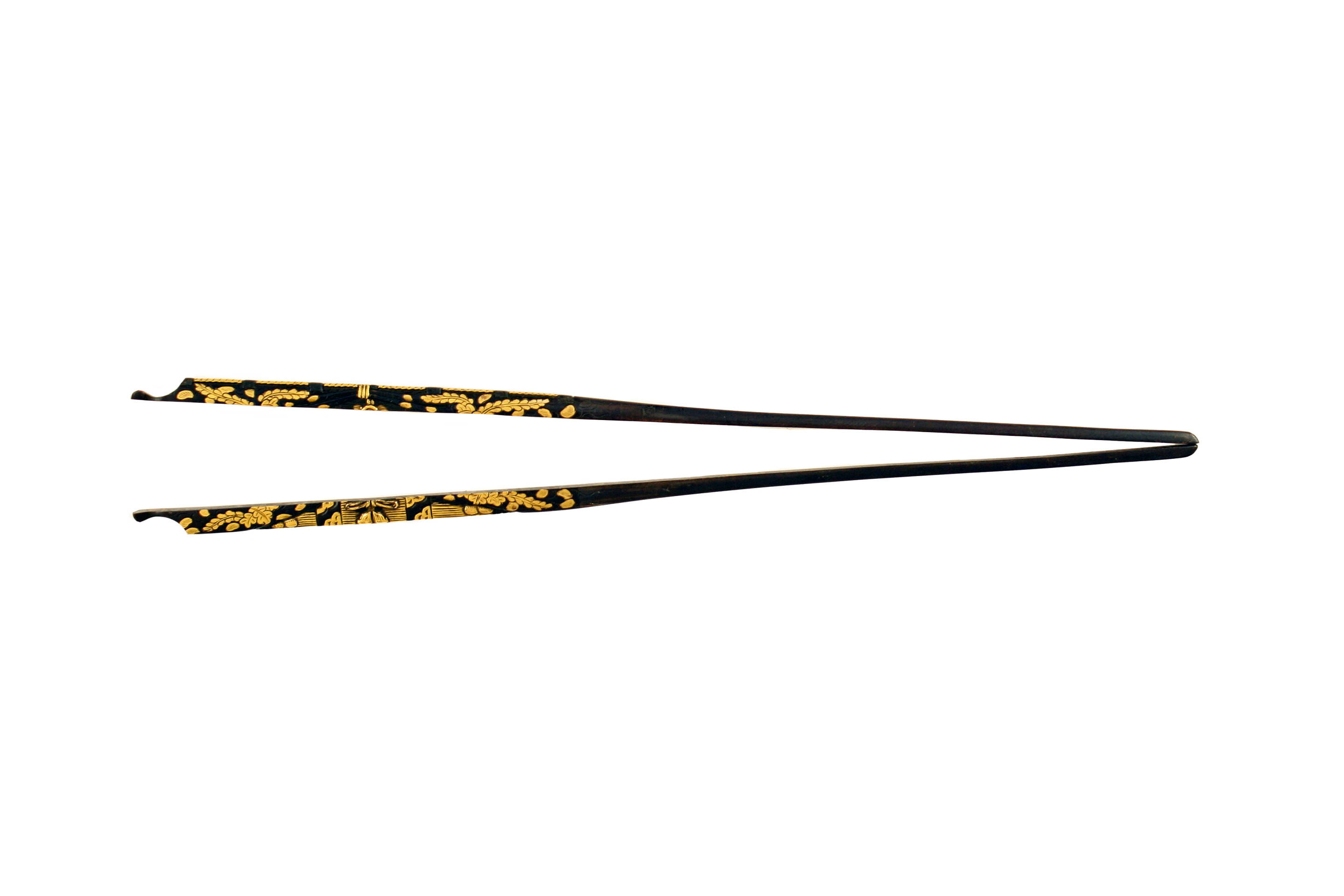
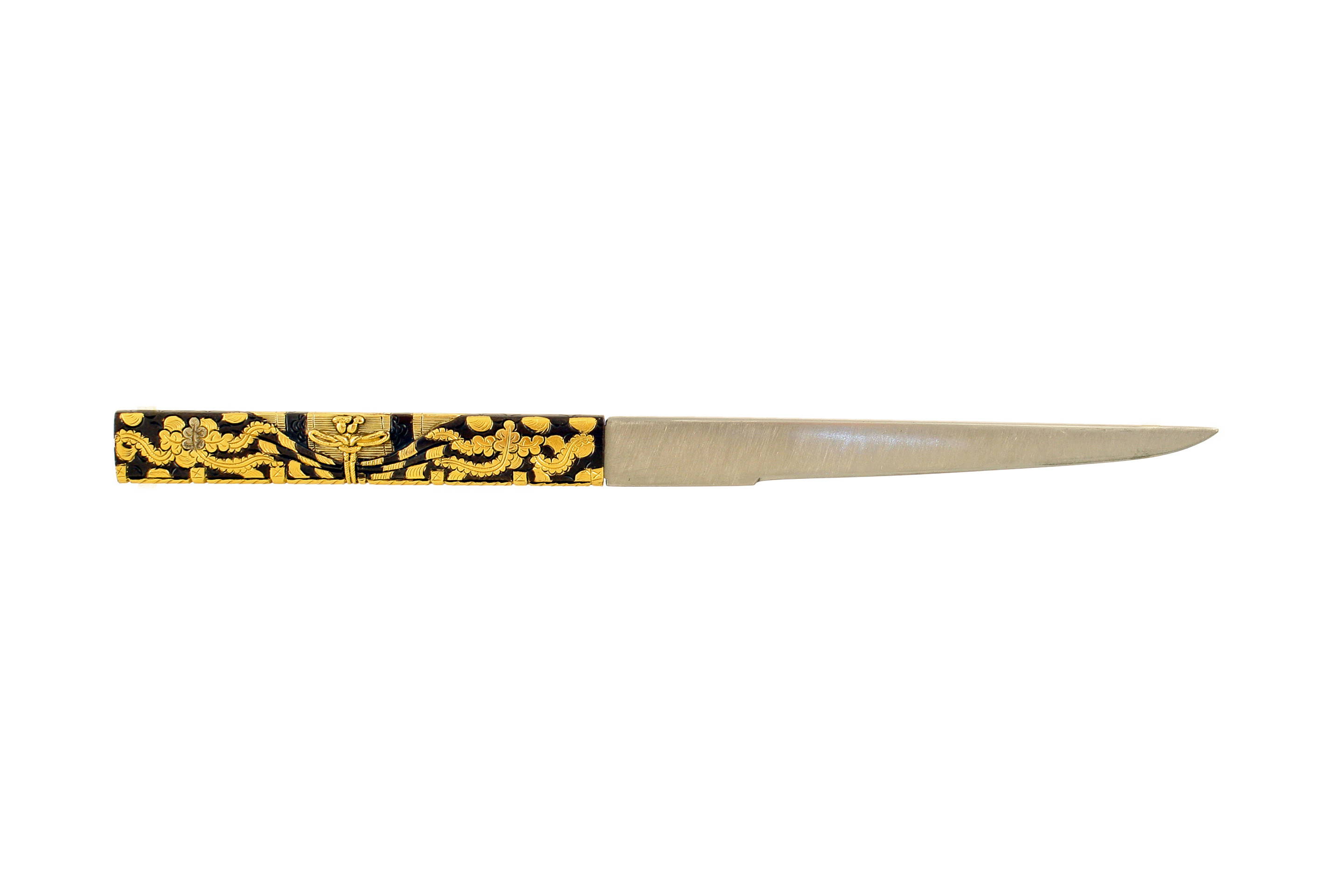
Ian Chapman for a pair of shibuichi kozuka & wari-kogai (no tab present to assist alignment) with a design of gold blinds 5.12.2018
£3,950.00
1 in stock